
The way people live, work, shop, and socialize has changed dramatically over the past two decades. Instead of separating residential neighborhoods, business districts, retail centers, and entertainment venues, modern cities are increasingly combining these elements into integrated communities known as mixed-use developments. These projects offer convenience, sustainability, and a better quality of life by bringing multiple functions together in one well-planned location.
For real estate investors, mixed-use developments have become highly attractive because they create diverse income opportunities while supporting long-term property appreciation. Residential apartments, office spaces, retail shops, restaurants, hotels, and recreational facilities all contribute to the success of these communities.
From Dubai and Singapore to London and New York, some of the world's most successful real estate projects are built around this concept. This article explores some of the best mixed-use developments around the world and explains why they continue to attract investors and residents.
What Is a Mixed-Use Development?
A mixed-use development is a master-planned project that combines different types of properties within a single community. Instead of focusing only on residential housing or commercial buildings, these developments integrate multiple functions to create self-sufficient neighborhoods.
A typical mixed-use project may include:
- Residential apartments and villas
- Office buildings
- Retail shops
- Shopping malls
- Restaurants and cafés
- Hotels
- Entertainment venues
- Parks and public spaces
- Educational facilities
- Healthcare services
This approach reduces travel time while creating vibrant communities where people can live, work, and enjoy leisure activities in one location.
Why Mixed-Use Developments Are Popular
Mixed-use communities offer numerous benefits for residents, businesses, and investors.
Some of the biggest advantages include:
- Better land utilization
- Higher property values
- Strong rental demand
- Improved lifestyle convenience
- Reduced traffic congestion
- Increased commercial activity
- Long-term investment potential
These developments also encourage sustainable urban growth by reducing dependence on long-distance commuting.
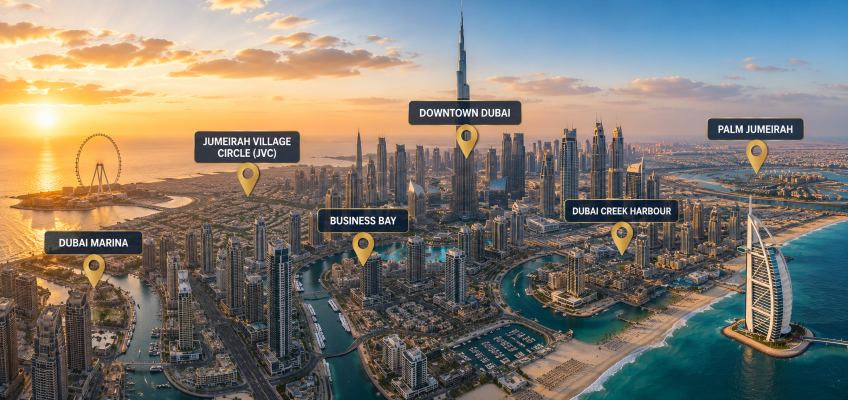
Dubai Marina, UAE
Dubai Marina is one of the world's most successful mixed-use developments.
The community combines:
- Luxury apartments
- Office towers
- Retail outlets
- Restaurants
- Hotels
- Marina facilities
- Entertainment areas
Residents enjoy a waterfront lifestyle while businesses benefit from a thriving commercial environment. Its international reputation continues to attract investors from around the world.
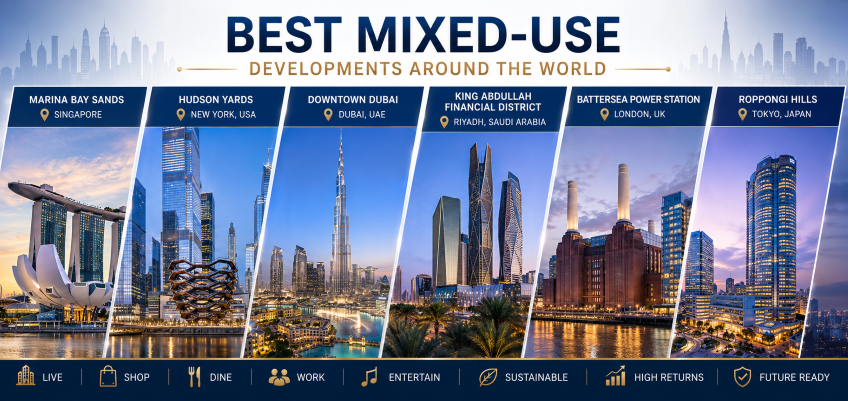
Downtown Dubai, UAE
Downtown Dubai has become one of the most recognizable urban developments globally.
The district includes:
- Residential towers
- Commercial offices
- Shopping destinations
- Hotels
- Entertainment venues
- Public spaces
The combination of residential and commercial activity creates strong demand for both property ownership and rental opportunities.
Dubai Creek Harbour, UAE
Dubai Creek Harbour represents the next generation of mixed-use development.
Its master plan includes:
- Residential communities
- Retail districts
- Business centers
- Waterfront parks
- Hotels
- Public transportation
- Recreational spaces
The project's long-term vision makes it an attractive investment destination.
Hudson Yards, New York
Hudson Yards is one of the largest private real estate developments in the United States.
The project features:
- Luxury apartments
- Commercial offices
- Shopping centers
- Hotels
- Restaurants
- Public plazas
- Cultural attractions
Its integrated planning has transformed a former industrial area into a vibrant urban destination.
Canary Wharf, London
Canary Wharf has evolved from a financial district into a complete mixed-use community.
The development includes:
- Residential apartments
- Office buildings
- Retail stores
- Restaurants
- Parks
- Transportation hubs
The area's continuous growth supports both residential and commercial investment.
Marina Bay, Singapore
Marina Bay is one of Asia's most successful examples of integrated urban planning.
Residents and businesses benefit from:
- Luxury residences
- Commercial towers
- Shopping malls
- Hotels
- Entertainment facilities
- Waterfront promenades
Singapore's stable economy further strengthens its investment appeal.
Lusail City, Qatar
Lusail City is a modern smart city designed around mixed-use planning.
The development includes:
- Residential districts
- Commercial centers
- Entertainment venues
- Hotels
- Waterfront communities
- Sports facilities
- Green spaces
It represents Qatar's vision for sustainable urban growth.
King Abdullah Economic City, Saudi Arabia
King Abdullah Economic City combines residential, industrial, commercial, and logistics sectors within one integrated development.
Major components include:
- Residential neighborhoods
- Business districts
- Industrial zones
- Educational institutions
- Healthcare facilities
- Shopping centers
Its large-scale planning supports long-term economic growth.
Songdo International Business District, South Korea
Songdo is one of the world's first smart cities designed around sustainability and mixed-use planning.
The development offers:
- Residential towers
- Commercial offices
- Educational institutions
- Parks
- Smart transportation
- Digital infrastructure
Technology plays a central role in daily life throughout the community.
Capital Smart City, Pakistan
Pakistan has also embraced the mixed-use development concept.
Capital Smart City combines:
- Residential neighborhoods
- Commercial districts
- Educational facilities
- Healthcare services
- Business centers
- Recreational parks
The project continues attracting both local and overseas investors.
Bahria Town, Pakistan
Bahria Town projects across Pakistan have introduced integrated communities featuring:
- Residential housing
- Commercial markets
- Schools
- Hospitals
- Theme parks
- Sports facilities
- Community centers
Its self-contained planning has changed modern residential living in Pakistan.
Why Investors Prefer Mixed-Use Developments
Investors increasingly choose mixed-use communities because they provide multiple income opportunities.
Advantages include:
Diverse Rental Income
Owners may invest in residential apartments, offices, retail shops, or commercial buildings within the same development.
Strong Property Demand
Mixed-use communities attract families, professionals, businesses, and tourists.
This creates consistent demand across different property types.
Higher Property Appreciation
Integrated developments often experience stronger long-term value growth because of their convenience and infrastructure.
Lower Investment Risk
Diversified property uses reduce dependence on a single market segment.
Lifestyle Benefits
Residents also enjoy numerous lifestyle advantages.
These include:
- Shorter commuting times
- Easy access to shopping
- Better healthcare services
- Nearby educational institutions
- Recreational facilities
- Community interaction
- Improved work-life balance
Living close to essential services improves convenience and overall quality of life.
Sustainable Urban Development
Mixed-use projects support environmental sustainability by:
- Reducing vehicle usage
- Encouraging walking and cycling
- Improving public transportation
- Maximizing land use
- Increasing green spaces
- Lowering carbon emissions
Many modern cities now prioritize mixed-use planning as part of their long-term urban development strategies.
Factors to Consider Before Investing
Before investing in any mixed-use development, buyers should evaluate:
Developer Reputation
Choose projects developed by experienced companies with successful completion records.
Location
Well-connected locations generally experience stronger demand.
Infrastructure
Quality roads, utilities, internet connectivity, and transportation improve long-term value.
Commercial Activity
Growing business districts support higher rental demand.
Legal Documentation
Always verify approvals, ownership records, and regulatory compliance before purchasing.
Future Trends
Mixed-use developments continue evolving with new technologies.
Future projects are expected to include:
- Smart buildings
- AI-powered community management
- Electric vehicle charging stations
- Renewable energy systems
- Digital property management
- Sustainable construction
- Wellness-focused design
These innovations will continue shaping the future of urban living.
Final Thoughts
Mixed-use developments have become one of the most successful models in modern real estate because they combine residential, commercial, retail, and recreational spaces into integrated communities. Projects such as Dubai Marina, Downtown Dubai, Hudson Yards, Marina Bay, Canary Wharf, Lusail City, and Capital Smart City demonstrate how thoughtful planning can create vibrant environments that benefit both residents and investors.
For property investors, these developments offer diversified income opportunities, strong rental demand, and excellent long-term appreciation. For residents, they provide convenience, accessibility, and an improved quality of life.
As cities continue to grow and urban planning becomes more sophisticated, mixed-use developments are expected to remain among the most attractive real estate investment opportunities around the world.
Frequently Asked Questions
What is a mixed-use development?
A mixed-use development combines residential, commercial, retail, hospitality, and recreational spaces within one integrated community.
Why are mixed-use developments attractive to investors?
They offer diversified rental income, strong property demand, higher appreciation potential, and lower investment risk through multiple property types.
Which countries have famous mixed-use developments?
The UAE, Singapore, the United States, the United Kingdom, Qatar, Saudi Arabia, South Korea, and Pakistan all feature successful mixed-use communities.
Are mixed-use developments good for families?
Yes. These communities provide easy access to schools, healthcare facilities, parks, shopping centers, restaurants, and recreational amenities, creating a convenient lifestyle.
What should I consider before investing in a mixed-use project?
Research the developer, verify legal approvals, evaluate infrastructure, study commercial activity, assess future development plans, and choose a well-connected location for the best long-term investment potential.