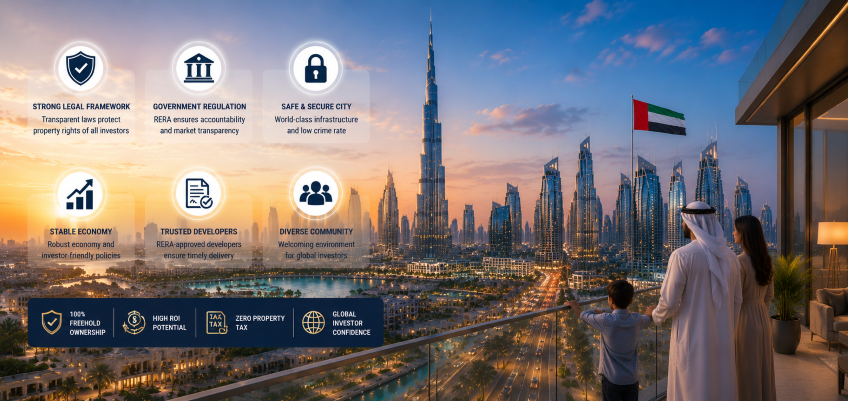

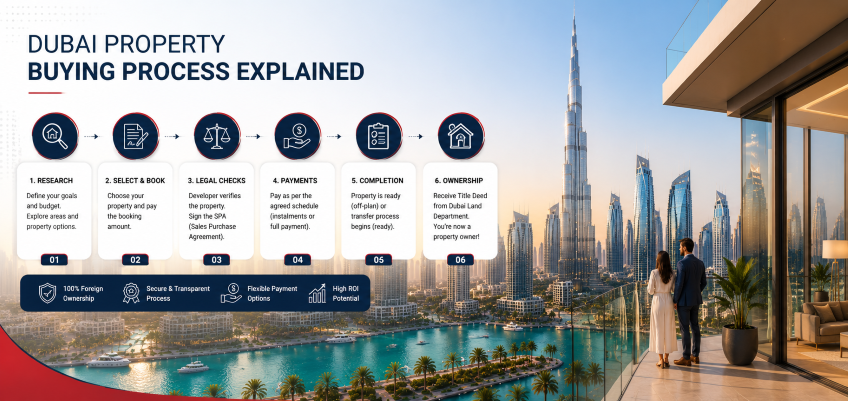
Dubai has become one of the world's most attractive real estate destinations, offering a wide range of residential and commercial properties for both local and international buyers. Its modern infrastructure, transparent property regulations, investor-friendly environment, and diverse communities continue to attract homeowners and investors from around the globe.
If you are planning to buy property in Dubai, understanding the purchasing process is essential. Whether you are buying an apartment, villa, townhouse, or commercial property, following the correct steps can help ensure a smooth and secure transaction.
This guide explains the Dubai property buying process step by step, helping first-time buyers and experienced investors understand what to expect before making a purchase.
Why Buy Property in Dubai?
Dubai offers numerous advantages for property buyers.
Some of the key benefits include:
- World-class infrastructure
- Modern residential communities
- Diverse property options
- High-quality lifestyle
- Strong rental demand
- Transparent property regulations
- Excellent long-term investment opportunities
The city's continuous growth makes it one of the most active real estate markets in the world.
Step 1: Define Your Property Goals
Before searching for a property, clearly identify your purpose for buying.
Ask yourself:
- Are you buying a family home?
- Are you investing for rental income?
- Are you purchasing for long-term appreciation?
- Do you want residential or commercial property?
Your objectives will help determine the most suitable property type and location.
Step 2: Set Your Budget
Establish a realistic budget before viewing properties.
Your financial plan should include:
- Purchase price
- Down payment
- Registration fees
- Service charges
- Maintenance costs
- Mortgage expenses (if applicable)
Planning ahead prevents unexpected financial pressure during the buying process.
Step 3: Choose the Right Location
Location is one of the most important factors when purchasing property.
Popular residential communities include:
- Dubai Hills Estate
- Dubai Marina
- Palm Jumeirah
- Downtown Dubai
- Business Bay
- Dubai Creek Harbour
- Arabian Ranches
- Jumeirah Village Circle
Each community offers different lifestyles, property types, and investment opportunities.
Choose a location that matches your personal and financial goals.
Step 4: Decide Between Off-Plan and Ready Property
Buyers must choose between two main property categories.
Off-Plan Property
Purchased before construction is completed.
Advantages include:
- Flexible payment plans
- Competitive prices
- Modern designs
- Long-term appreciation potential
Ready Property
Fully completed and available for immediate possession.
Benefits include:
- Immediate occupancy
- Rental income
- Physical inspection
- Established communities
Both options have advantages depending on your investment strategy.
Step 5: Research the Developer
If purchasing an off-plan property, investigate the developer carefully.
Review:
- Previous projects
- Delivery history
- Construction quality
- Customer reviews
- Financial reputation
Buying from experienced developers reduces investment risk.
Step 6: View the Property
If purchasing a completed property, arrange a personal inspection.
During your visit, evaluate:
- Construction quality
- Interior finishes
- Building maintenance
- Community facilities
- Parking
- Security
- Views
- Accessibility
A thorough inspection helps identify any issues before purchasing.
Step 7: Review Legal Documentation
Carefully examine all legal documents before making any payment.
Important documents may include:
- Property title information
- Sales agreement
- Payment schedule
- Developer documentation
- Building approvals
Reviewing documentation protects your investment.
Step 8: Reserve the Property
Once you decide to proceed, the property is usually reserved.
This stage typically involves:
- Signing a reservation form
- Paying the agreed reservation amount
- Confirming purchase terms
The property is then temporarily removed from the market.
Step 9: Arrange Financing
If you require financing, begin the mortgage approval process.
Compare different lenders by reviewing:
- Interest rates
- Down payment requirements
- Loan tenure
- Monthly installments
- Processing fees
Choose a financing option that fits your long-term financial plan.
Step 10: Sign the Sales Agreement
The next step is signing the formal sales agreement.
The agreement outlines:
- Purchase price
- Payment schedule
- Property details
- Completion timeline
- Buyer and seller responsibilities
Read every clause carefully before signing.
Step 11: Complete Payment
Payment procedures vary depending on whether the property is ready or off-plan.
Ready Property
The remaining purchase amount is typically paid before ownership transfer.
Off-Plan Property
Payments are usually made according to the developer's construction schedule.
Always maintain records of every payment made.
Step 12: Property Registration
The property must be officially registered with the relevant authorities.
Registration confirms legal ownership and completes the purchase process.
Ensure all registration requirements are fulfilled before taking possession.
Step 13: Property Handover
For ready properties, possession occurs shortly after the transaction is completed.
For off-plan developments, possession takes place after construction finishes and all contractual conditions have been met.
Before accepting handover:
- Inspect the property carefully.
- Check construction quality.
- Verify utility connections.
- Report any defects.
Step 14: Move In or Lease the Property
Once ownership is complete, you may:
- Move into your new home.
- Lease the property to tenants.
- Furnish the property.
- Hire a property management company if needed.
Many investors begin generating rental income immediately after handover.
Costs Buyers Should Consider
Property buyers should budget for expenses beyond the purchase price.
Common costs include:
- Registration fees
- Service charges
- Maintenance fees
- Utility connections
- Mortgage expenses
- Property insurance
- Interior furnishing
Understanding total ownership costs improves financial planning.
Choosing the Right Community
Every Dubai community offers unique advantages.
When comparing locations, evaluate:
- Schools
- Healthcare facilities
- Public transportation
- Shopping centers
- Parks
- Security
- Business districts
A suitable location improves both lifestyle and investment value.
Common Mistakes to Avoid
Many first-time buyers make avoidable mistakes.
These include:
- Not researching the developer
- Ignoring legal documentation
- Buying without comparing communities
- Underestimating ownership costs
- Choosing location based only on price
- Not reviewing service charges
Proper research reduces investment risk.
Benefits of Buying Property in Dubai
Dubai continues attracting buyers because of its:
- Modern infrastructure
- Diverse communities
- High-quality construction
- Excellent connectivity
- Strong rental demand
- Long-term appreciation potential
- International lifestyle
These advantages support both residential living and investment growth.
Tips for First-Time Buyers
If this is your first Dubai property purchase:
- Define your investment goals.
- Compare several communities.
- Understand all costs.
- Review payment plans carefully.
- Research the developer.
- Inspect ready properties thoroughly.
- Seek professional advice if necessary.
Careful planning improves the overall buying experience.
Future Outlook
Dubai continues investing in:
- Smart cities
- Sustainable communities
- Luxury developments
- Mixed-use projects
- Digital property services
- Renewable energy
These initiatives continue strengthening the city's property market.
Final Thoughts
Buying property in Dubai is a structured process designed to provide security and transparency for both local and international buyers. From setting your budget and choosing the right location to reviewing legal documents, completing registration, and taking possession, each step plays an important role in protecting your investment.
Whether you choose an off-plan apartment, a luxury villa, a townhouse, or a commercial property, taking the time to understand the buying process will help you make informed decisions. Careful research, financial planning, and selecting reputable developers can significantly improve your long-term investment success.
With its modern infrastructure, growing economy, and international appeal, Dubai continues to offer outstanding opportunities for buyers looking to own property in one of the world's most dynamic real estate markets.
Frequently Asked Questions
Can foreigners buy property in Dubai?
Yes. International buyers can purchase property in designated freehold areas, where they are allowed to own real estate according to Dubai's property regulations.
Should I buy an off-plan or ready property?
Off-plan properties often offer flexible payment plans and future appreciation, while ready properties provide immediate possession and rental income. The right choice depends on your investment goals.
What costs should I budget for besides the purchase price?
In addition to the property price, buyers should consider registration fees, service charges, maintenance costs, mortgage expenses (if applicable), insurance, and furnishing costs.
Why is choosing the right location important?
Location affects rental demand, resale value, accessibility, lifestyle, and long-term property appreciation. Communities with strong infrastructure and amenities generally perform better over time.
What should I check before completing the purchase?
Review the sales agreement, verify legal documentation, understand payment terms, inspect the property (if ready), research the developer, and ensure all registration requirements are completed before finalizing the transaction.