
Buying property is one of the most important financial decisions you will make. Whether you are purchasing a residential plot, a family home, an apartment, or commercial property, careful planning is essential to protect your investment. Pakistan's real estate market offers a wide range of opportunities, but it also requires buyers to perform proper research before making any commitment.
Many property disputes and financial losses occur because buyers overlook important details such as legal approvals, ownership records, or the reputation of the developer. Taking the time to verify every aspect of a property can help you avoid future complications and ensure that your investment is secure.
This guide outlines the most important things you should check before buying property in Pakistan.
Verify Legal Approval
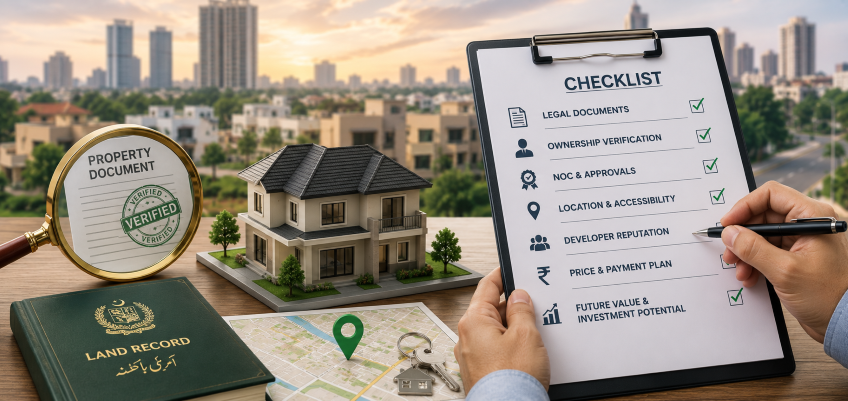
The first step before purchasing any property is to confirm that the project or housing society has legal approval from the relevant development authority.
Depending on the location, approvals may be issued by authorities such as:
- Lahore Development Authority (LDA)
- Capital Development Authority (CDA)
- Rawalpindi Development Authority (RDA)
- Multan Development Authority (MDA)
- Faisalabad Development Authority (FDA)
- Sindh Building Control Authority (SBCA)
Never rely only on advertisements or verbal assurances. Request official documents and verify them through the relevant authority whenever possible.
Buying approved property significantly reduces legal risks.
Confirm Ownership Documents
One of the most important steps is verifying ownership.
Ensure the seller has legal ownership of the property and possesses all required documents.
Important documents include:
- Sale deed
- Registry documents
- Transfer letter
- Allotment letter
- Possession letter
- National identity documents
- Property tax records
If multiple owners are involved, obtain written consent from all parties before proceeding.
Research the Developer
If you are buying property in a housing society or a newly launched project, investigate the developer's reputation.
Check:
- Previous completed projects
- Delivery timelines
- Construction quality
- Customer feedback
- Financial stability
A reputable developer is more likely to complete the project on time and maintain promised standards.
Inspect the Property Location
Location has a major impact on both your lifestyle and your property's future value.
Consider whether the property has easy access to:
- Main roads
- Public transportation
- Schools
- Universities
- Hospitals
- Shopping centers
- Business districts
- Parks
Properties located in well-connected areas generally appreciate faster.
Visit the Property Personally
Always inspect the property before making a payment.
During your visit, examine:
- Road conditions
- Development progress
- Utility connections
- Construction quality
- Drainage systems
- Street lighting
- Security arrangements
- Neighborhood environment
A site visit often reveals important details that photographs or brochures cannot show.
Check Utility Services
Reliable utilities are essential for comfortable living.
Verify the availability of:
- Electricity
- Water supply
- Natural gas
- Sewerage system
- High-speed internet
- Waste management services
Incomplete utility infrastructure can result in unexpected expenses after purchase.
Review Infrastructure Quality
Modern infrastructure adds value to both residential and commercial properties.
Look for:
- Wide roads
- Proper drainage
- Underground electrical systems
- Well-maintained streets
- Green belts
- Public parks
Communities with quality infrastructure typically maintain stronger resale values.
Evaluate Security
Security should be a top priority, particularly for families.
Good housing societies usually provide:
- Gated entrances
- CCTV surveillance
- Security guards
- Boundary walls
- Visitor management systems
- Emergency response services
A secure environment also makes the property more attractive to future buyers.
Study Future Development Plans
Future infrastructure projects can significantly increase property values.
Research upcoming developments such as:
- Highways
- Ring roads
- Metro systems
- Airports
- Commercial districts
- Educational institutions
- Hospitals
Properties located near future development projects often appreciate more rapidly.
Compare Market Prices
Before making an offer, compare similar properties in nearby locations.
Evaluate:
- Price per square foot
- Plot rates
- House prices
- Commercial property values
- Rental demand
Comparing prices helps you determine whether the property is fairly valued.
Understand All Costs
Many buyers focus only on the purchase price while overlooking additional expenses.
Consider costs such as:
- Registration fees
- Transfer charges
- Stamp duties
- Development charges
- Utility connection fees
- Property taxes
- Maintenance charges
Calculating the total investment helps you avoid unexpected financial burdens.
Verify Payment Terms
If purchasing through installments, carefully review the payment schedule.
Understand:
- Booking amount
- Monthly installments
- Development charges
- Possession timeline
- Penalties for delayed payments
- Refund policy
Never sign agreements without reading every clause.
Check Community Facilities
Modern housing societies offer more than residential plots.
Look for communities that include:
- Schools
- Hospitals
- Parks
- Mosques
- Shopping centers
- Sports facilities
- Community clubs
These amenities improve quality of life while supporting long-term property appreciation.
Evaluate Rental Potential
If your goal is investment, assess the area's rental demand.
High-demand rental locations often include:
- Business districts
- University areas
- Industrial zones
- Commercial centers
- Major transportation routes
Strong rental demand provides regular income and improves investment returns.
Review Property Taxes
Ensure there are no outstanding taxes or legal obligations attached to the property.
Request updated records for:
- Property tax
- Development charges
- Maintenance fees
- Utility bills
Outstanding liabilities may become your responsibility after purchase.
Check Encumbrances
Confirm that the property is free from legal disputes, mortgages, or court cases.
Ask for written confirmation that:
- No bank loan exists against the property.
- There are no ownership disputes.
- The property is not under litigation.
Legal verification protects your investment.
Consult Property Professionals
Working with experienced professionals can simplify the buying process.
Consider consulting:
- Licensed real estate agents
- Property lawyers
- Tax consultants
- Surveyors
Professional advice helps identify potential risks before completing the transaction.
Avoid Unrealistic Offers
Be cautious of properties advertised far below market value.
Unusually low prices may indicate:
- Legal complications
- Incomplete documentation
- Development delays
- Ownership disputes
- Poor infrastructure
If an offer seems too good to be true, conduct additional research before proceeding.
Think About Long-Term Value
Property should not only meet your current needs but also offer future growth.
Ask yourself:
- Will this location continue developing?
- Is demand increasing?
- Are nearby commercial areas expanding?
- Will infrastructure improvements benefit the area?
Long-term planning improves investment returns.
Common Mistakes Buyers Should Avoid
Many first-time buyers make avoidable mistakes.
Some of the most common include:
- Buying without legal verification
- Ignoring developer reputation
- Skipping the site visit
- Focusing only on low prices
- Not comparing market values
- Overlooking hidden charges
- Purchasing without understanding documentation
Avoiding these mistakes helps protect your investment.
Benefits of Careful Property Research
Taking time to research before purchasing provides several advantages.
These include:
- Greater investment security
- Better resale potential
- Reduced legal risk
- Improved financial planning
- Higher long-term appreciation
- Greater peace of mind
A well-informed buyer is less likely to encounter costly problems.
Final Thoughts
Buying property in Pakistan can be a rewarding investment when approached carefully. Verifying legal approvals, confirming ownership documents, inspecting the property, researching the developer, evaluating infrastructure, and understanding all associated costs are essential steps before making a purchase.
Whether you are buying a residential plot, a family home, an apartment, or commercial property, thorough research protects your investment and helps you make confident decisions. Taking the time to compare options, visit the site, and consult experienced professionals can save you from future legal and financial complications.
A successful property purchase is not simply about finding the right location—it is about ensuring that every aspect of the investment is secure, transparent, and aligned with your long-term goals.
Frequently Asked Questions
What is the first thing to check before buying property in Pakistan?
The first step is to verify that the property or housing society has legal approval from the relevant development authority and that all ownership documents are authentic.
Why is a site visit important before buying property?
A site visit allows you to inspect infrastructure, construction quality, utility services, security, and the surrounding environment before making a financial commitment.
Should I verify the developer's reputation?
Yes. A developer's history, completed projects, customer reviews, and delivery record provide valuable information about the project's reliability.
How can I avoid property fraud?
Verify legal documents, confirm ownership, check development authority approvals, inspect the property personally, and consult qualified legal or real estate professionals.
Is location the most important factor in property investment?
Location is one of the most important factors because it influences accessibility, lifestyle, rental demand, future development, and long-term property appreciation.