
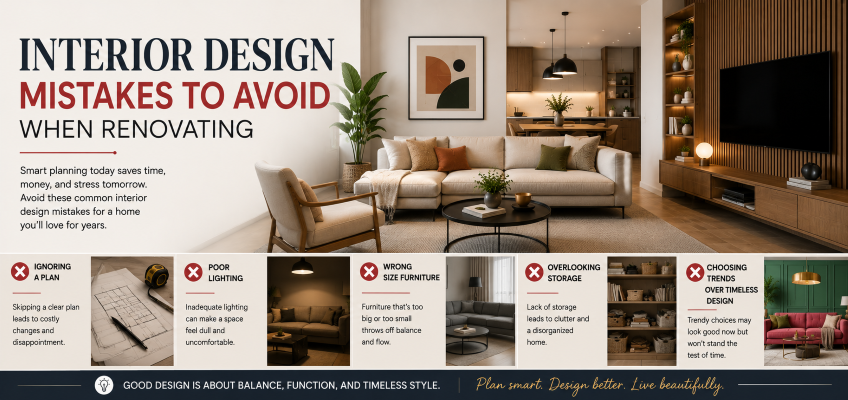
Renovating a home is an exciting opportunity to improve both its appearance and functionality. Whether you are updating a single room or transforming an entire house, careful planning is essential for achieving the best results. While choosing beautiful materials and modern furniture is important, avoiding common interior design mistakes can save you time, money, and unnecessary frustration.
Many homeowners begin renovation projects with great enthusiasm but overlook practical details such as lighting, storage, room layout, and furniture placement. These mistakes may not seem significant during construction, but they can affect comfort, functionality, and even the long-term value of your home.
A successful renovation balances style with practicality. Every design decision should improve how your home looks while making daily life easier. This guide highlights some of the most common interior design mistakes and explains how to avoid them when planning your next renovation.
Renovating Without a Clear Plan
One of the biggest mistakes homeowners make is starting a renovation without proper planning.
Before any work begins, define:
- Your renovation goals
- Your budget
- Your preferred design style
- Room priorities
- Timeline
Having a detailed plan reduces costly changes during construction and helps keep the project on schedule.
Ignoring Functionality
A beautiful room is not useful if it does not function well.
Before selecting finishes or furniture, consider how each room will be used.
Think about:
- Daily activities
- Family size
- Storage needs
- Traffic flow
- Future lifestyle changes
Design should always support everyday living.
Choosing Trends Over Timeless Design
Interior design trends come and go, but renovations should last for many years.
Instead of following every new trend, choose timeless elements such as:
- Neutral colors
- Natural materials
- Quality flooring
- Classic cabinetry
- Durable furniture
You can always introduce trendy colors through decorative accessories.
Poor Space Planning
Improper room layouts can make even large homes feel uncomfortable.
Avoid:
- Blocking walkways
- Overcrowding furniture
- Awkward furniture placement
- Poor room flow
Leave enough space for comfortable movement throughout every room.
Underestimating Storage Needs
Storage is often overlooked during renovations.
Without enough storage, homes quickly become cluttered.
Include solutions such as:
- Built-in wardrobes
- Kitchen pantry cabinets
- Floating shelves
- Storage benches
- Under-bed storage
- Hidden cabinets
Well-planned storage improves organization and functionality.
Inadequate Lighting
Lighting is one of the most important aspects of interior design.
Many homeowners rely only on ceiling lights, resulting in flat and uncomfortable interiors.
Instead, combine:
- Ambient lighting
- Task lighting
- Accent lighting
Layered lighting creates warmth while improving usability.
Ignoring Natural Light
Natural light makes interiors feel larger and healthier.
Avoid:
- Blocking windows with furniture
- Using heavy curtains
- Choosing dark wall colors in poorly lit rooms
Maximize daylight wherever possible.
Selecting the Wrong Paint Colors
Paint colors often appear different once applied to large walls.
Before making a final decision:
- Test paint samples
- Observe colors during different times of the day
- Consider natural lighting
Neutral colors usually remain attractive longer than bold shades.
Buying Furniture Too Early
Purchasing furniture before completing renovations can lead to sizing problems.
Wait until:
- Flooring is finished
- Walls are painted
- Room dimensions are finalized
This allows you to choose furniture that fits perfectly.
Choosing Furniture That Is Too Large
Oversized furniture makes rooms feel smaller.
Measure every room before purchasing:
- Sofas
- Dining tables
- Beds
- Cabinets
Furniture should fit comfortably while leaving clear walking space.
Forgetting Electrical Planning
Electrical outlets should be planned before renovation work begins.
Consider locations for:
- Televisions
- Kitchen appliances
- Charging stations
- Home offices
- Bedside lighting
Adding outlets later is often expensive.
Ignoring Ventilation
Good ventilation improves indoor comfort.
Ensure proper airflow through:
- Windows
- Exhaust systems
- Ceiling fans
- Kitchen ventilation
- Bathroom ventilation
Fresh air contributes to healthier living.
Poor Kitchen Layout
The kitchen should support efficient movement.
Avoid placing:
- Refrigerator
- Sink
- Stove
too far apart.
A practical work triangle makes cooking easier and more enjoyable.
Choosing Low-Quality Materials
Selecting the cheapest materials often results in higher maintenance costs.
Invest in durable options for:
- Flooring
- Countertops
- Cabinetry
- Bathroom fixtures
- Doors
Quality materials provide better long-term value.
Overdecorating
Too many decorative items can make renovated spaces feel crowded.
Instead, focus on:
- Quality artwork
- Indoor plants
- Decorative lighting
- Simple accessories
Minimal decoration creates elegant interiors.
Ignoring Ceiling Design
Ceilings are often forgotten during renovations.
Simple improvements include:
- Recessed lighting
- Decorative molding
- Wooden beams
- Painted ceilings
Well-designed ceilings complete the room.
Choosing the Wrong Flooring
Flooring should suit the room's purpose.
Consider:
- Durability
- Maintenance
- Moisture resistance
- Comfort
- Style
Using consistent flooring throughout connected spaces improves visual flow.
Forgetting Future Needs
Think beyond your current lifestyle.
Consider future requirements such as:
- Growing families
- Home office space
- Aging in place
- Additional storage
Flexible designs remain useful longer.
Ignoring Bathroom Functionality
Bathrooms should balance comfort with practicality.
Include:
- Storage cabinets
- Proper lighting
- Ventilation
- Easy-to-clean surfaces
Avoid sacrificing function for appearance.
Poor Color Coordination
Using too many colors creates visual confusion.
Choose one primary color palette and repeat it throughout the home using:
- Furniture
- Rugs
- Curtains
- Decorative accessories
Consistency creates harmony.
Skipping Professional Advice
Although many homeowners handle decoration themselves, professional designers can help with:
- Space planning
- Material selection
- Lighting design
- Furniture placement
Expert guidance often prevents expensive mistakes.
Not Setting a Realistic Budget
Unexpected expenses are common during renovations.
Always include a contingency budget for:
- Material changes
- Labor adjustments
- Hidden repairs
- Delivery costs
Good financial planning reduces stress.
Ignoring Sustainability
Modern renovations increasingly prioritize environmentally responsible choices.
Consider:
- LED lighting
- Water-saving fixtures
- Sustainable materials
- Energy-efficient appliances
Eco-friendly design benefits both homeowners and the environment.
Forgetting Home Organization
Even beautifully renovated homes become cluttered without organization.
Plan storage for:
- Shoes
- Cleaning supplies
- Children's toys
- Seasonal decorations
- Kitchen equipment
Everything should have a designated place.
Rushing Design Decisions
Renovation decisions should never be rushed.
Take time to compare:
- Materials
- Furniture
- Lighting
- Colors
- Layouts
Thoughtful planning produces better long-term results.
Overlooking Small Details
Small finishing touches greatly influence the final appearance.
Pay attention to:
- Cabinet handles
- Door hardware
- Switch plates
- Curtain rods
- Decorative lighting
These details complete the overall design.
Not Maintaining Design Consistency
Each room should complement the rest of the home.
Maintain consistency through:
- Color palettes
- Flooring
- Materials
- Decorative styles
A unified design creates a more luxurious appearance.
Common Renovation Checklist
Before starting your project, remember to:
- Plan your budget.
- Measure every room.
- Prioritize functionality.
- Maximize storage.
- Improve lighting.
- Choose timeless materials.
- Consider future needs.
- Create a realistic timeline.
Preparation leads to better renovation outcomes.
Final Thoughts
A successful home renovation is about much more than selecting beautiful furniture and modern finishes. Careful planning, practical layouts, quality materials, and attention to everyday functionality all contribute to creating a home that remains comfortable and attractive for many years.
Avoiding common interior design mistakes such as poor lighting, inadequate storage, oversized furniture, inconsistent color schemes, and rushed decisions can save both time and money while improving your overall living experience. Every renovation should balance beauty with practicality so that each room not only looks impressive but also supports your family's daily lifestyle.
Whether you are renovating a single room or redesigning your entire home, thoughtful planning and informed design choices will help you create interiors that combine style, comfort, efficiency, and long-term value.
Frequently Asked Questions
What is the most common interior design mistake during renovation?
One of the most common mistakes is renovating without a detailed plan. Poor planning often leads to budget overruns, layout problems, and costly changes later in the project.
Why is lighting important in interior design?
Lighting affects the appearance, comfort, and functionality of every room. Combining ambient, task, and accent lighting creates a balanced and welcoming environment.
How can I avoid choosing the wrong furniture?
Measure your rooms carefully, complete renovation work before shopping, and ensure furniture fits comfortably without blocking walkways or making spaces feel crowded.
Should I follow current design trends?
It is better to use timeless materials and neutral color palettes for major renovation elements. Add trendy colors and styles through accessories that can be updated easily.
Why is storage important during renovation?
Adequate storage keeps your home organized, reduces clutter, improves functionality, and helps maintain a clean and spacious appearance long after the renovation is complete.