
Lighting is one of the most important elements of interior design, yet it is often overlooked during home decoration. While furniture, wall colors, and decorative accessories define the style of a room, lighting creates its atmosphere. The right lighting can make a small room feel larger, highlight beautiful architectural features, improve functionality, and create a warm, welcoming environment.
Modern interior design goes beyond installing a single ceiling light. Today's homes combine natural light, decorative fixtures, task lighting, and smart technology to create balanced spaces that are both beautiful and practical. Whether you are decorating a living room, bedroom, kitchen, dining area, or home office, creative lighting can completely transform your interiors.
This guide explores inspiring lighting ideas that will help you brighten your home while adding style, comfort, and elegance.
Understand the Three Types of Lighting
A well-designed room uses different types of lighting together.
The three main categories are:
- Ambient lighting
- Task lighting
- Accent lighting
Combining these layers creates a balanced and comfortable environment.
Maximize Natural Light
Natural light is one of the most valuable design features in any home.
To increase daylight:
- Keep windows clear.
- Use sheer curtains.
- Choose light-colored walls.
- Position mirrors opposite windows.
- Avoid placing large furniture near windows.
Natural light makes rooms feel brighter, larger, and more inviting.
Install Statement Pendant Lights
Pendant lights are both practical and decorative.
They work beautifully above:
- Dining tables
- Kitchen islands
- Coffee tables
- Staircases
- Entryways
Choose designs that complement your interior style while becoming a focal point.
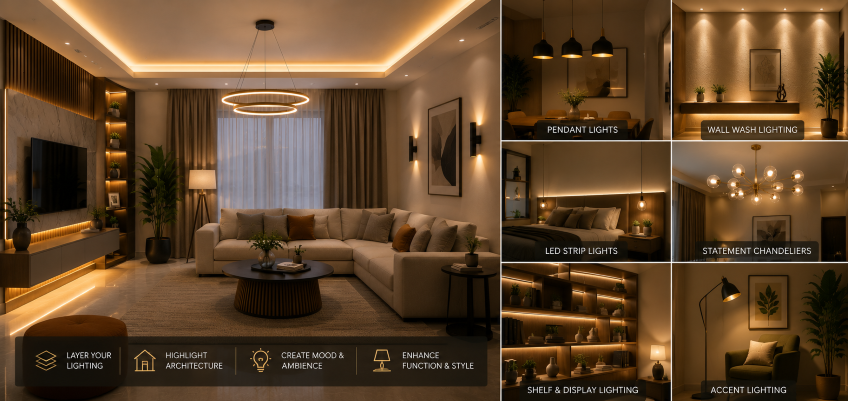
Create Layered Lighting
Instead of relying on one light source, combine multiple fixtures.
A balanced lighting plan may include:
- Ceiling lights
- Floor lamps
- Table lamps
- Wall sconces
- LED strip lighting
Layered lighting allows you to adjust the atmosphere for different occasions.
Use Warm White Lighting
Warm lighting creates a comfortable and relaxing atmosphere.
It works particularly well in:
- Living rooms
- Bedrooms
- Dining rooms
Soft light encourages relaxation and makes interiors feel welcoming.
Highlight Artwork with Picture Lights
If you display artwork or photographs, dedicated picture lighting can make them stand out.
These lights:
- Add visual interest
- Improve depth
- Draw attention to decorative pieces
They also create a gallery-like appearance in your home.
Install LED Strip Lighting
LED strips are among the most versatile lighting solutions.
Popular locations include:
- Under kitchen cabinets
- Behind televisions
- Inside shelving
- Under floating furniture
- Along staircases
Hidden lighting creates a clean and modern look.
Add Floor Lamps
Floor lamps provide flexible lighting while serving as decorative elements.
They work well in:
- Reading corners
- Living rooms
- Bedrooms
- Home offices
Choose simple designs that complement your furniture.
Use Table Lamps for Warmth
Table lamps create intimate lighting while adding style.
Place them on:
- Bedside tables
- Console tables
- Sideboards
- Study desks
Matching table lamps create symmetry in bedrooms.
Install Wall Sconces
Wall-mounted lighting saves space while creating elegant interiors.
Wall sconces work particularly well in:
- Hallways
- Bedrooms
- Living rooms
- Bathrooms
They also reduce the need for additional table lamps.
Illuminate Shelving
Built-in shelves become decorative features when properly lit.
Add LED lighting to display:
- Books
- Plants
- Sculptures
- Decorative accessories
Lighting gives shelves greater depth and visual appeal.
Highlight Architectural Features
Use lighting to emphasize unique design elements such as:
- Stone walls
- Wooden panels
- Decorative molding
- Niches
- Ceiling details
Accent lighting adds sophistication without requiring major renovations.
Add Chandeliers
Modern chandeliers remain popular for creating elegant interiors.
Suitable locations include:
- Dining rooms
- Living rooms
- Entryways
- Stairwells
Contemporary chandeliers often combine glass, metal, and minimalist designs.
Use Recessed Ceiling Lights
Recessed lighting creates clean and uncluttered ceilings.
Benefits include:
- Even illumination
- Modern appearance
- Flexible placement
- Space-saving design
They work well throughout the home.
Create Cozy Reading Corners
A comfortable reading space benefits from focused lighting.
Include:
- Adjustable floor lamp
- Comfortable chair
- Side table
- Bookshelf
Good lighting reduces eye strain while improving comfort.
Install Smart Lighting
Technology has transformed modern lighting.
Smart systems allow homeowners to:
- Adjust brightness
- Change color temperature
- Schedule lighting
- Control lights with mobile apps
- Use voice commands
Smart lighting improves both convenience and energy efficiency.
Decorate Outdoor Spaces
Outdoor lighting extends your living space after sunset.
Popular ideas include:
- Garden lights
- Pathway lighting
- Wall-mounted fixtures
- String lights
- Deck lighting
Outdoor lighting improves safety while enhancing curb appeal.
Use Decorative Lanterns
Lanterns create warm and relaxing environments.
They work well on:
- Dining tables
- Balconies
- Entryways
- Patios
Both traditional and modern lanterns add character.
Highlight Kitchen Work Areas
Task lighting improves kitchen functionality.
Install lighting:
- Under cabinets
- Above islands
- Over countertops
- Inside cabinets
Well-lit kitchens are safer and easier to use.
Add Mirror Lighting
Bathrooms benefit from proper mirror lighting.
Choose:
- Vertical wall lights
- LED mirrors
- Backlit mirrors
Good lighting improves both functionality and appearance.
Light Staircases
Stair lighting enhances safety while creating dramatic visual effects.
Options include:
- Step lighting
- Wall-mounted fixtures
- LED strips
- Handrail lighting
These solutions combine practicality with modern design.
Use Lighting to Divide Spaces
Open-plan homes benefit from different lighting zones.
For example:
- Pendant lights above dining tables
- Floor lamps in living areas
- Recessed lights in kitchens
Lighting helps define each functional area.
Choose Decorative Bulbs
Visible decorative bulbs have become popular in contemporary interiors.
Options include:
- Edison bulbs
- Frosted bulbs
- Globe bulbs
Choose warm tones for comfortable living spaces.
Add Accent Lighting Behind Furniture
Hidden lighting behind:
- Headboards
- TV units
- Cabinets
- Mirrors
creates depth and a luxurious appearance.
Match Lighting with Interior Style
Your lighting should complement your décor.
Examples include:
Minimalist Homes
- Simple pendant lights
- Recessed lighting
- Linear fixtures
Industrial Interiors
- Black metal fixtures
- Edison bulbs
- Exposed lighting
Scandinavian Design
- Natural wood lighting
- White fixtures
- Soft lighting
Consistency creates harmony.
Focus on Energy Efficiency
Modern lighting should also reduce energy consumption.
Choose:
- LED bulbs
- Smart controls
- Motion sensors
- Energy-efficient fixtures
These solutions lower electricity costs while extending bulb life.
Common Lighting Mistakes
Avoid these common errors:
- Using only one ceiling light
- Poor placement
- Harsh white lighting
- Ignoring natural light
- Choosing oversized fixtures
- Forgetting task lighting
Layered lighting usually produces the best results.
Future Lighting Trends
Interior lighting continues evolving through:
- Smart home integration
- Wireless controls
- Sustainable materials
- Human-centric lighting
- Energy-efficient technology
- Adjustable color temperatures
Technology is making lighting more personalized than ever.
Final Thoughts
Lighting has the power to completely transform the appearance and atmosphere of a home. Thoughtfully planned lighting enhances comfort, improves functionality, highlights architectural features, and creates inviting spaces where people enjoy spending time.
From statement chandeliers and elegant pendant lights to hidden LED strips, smart lighting systems, wall sconces, and natural daylight, every lighting choice contributes to the overall interior design. By combining different lighting layers and selecting fixtures that complement your home's style, you can create interiors that are both practical and visually impressive.
Whether you are decorating a new home or updating an existing one, investing in creative lighting is one of the most effective ways to enhance your living environment while adding timeless elegance and everyday comfort.
Frequently Asked Questions
What are the three main types of interior lighting?
The three primary types are ambient lighting for overall illumination, task lighting for specific activities, and accent lighting to highlight decorative features or architectural details.
Which lighting is best for a living room?
A combination of ceiling lighting, floor lamps, table lamps, and accent lighting creates a balanced and comfortable living room suitable for both relaxation and entertaining.
How can lighting make a small room look bigger?
Maximizing natural light, using mirrors, installing recessed lighting, and choosing light-colored walls help make small spaces appear larger and brighter.
Are LED lights suitable for home decoration?
Yes. LED lights are energy-efficient, long-lasting, available in various color temperatures, and ideal for ambient, task, and accent lighting throughout the home.
Is smart lighting worth installing?
Smart lighting offers greater convenience by allowing you to control brightness, schedules, and color temperature through mobile apps or voice assistants, while also improving energy efficiency and flexibility.